A garden is a special place that rises from the bare earth each spring and takes you away — down memory lane. My earliest garden memory is of an east Tennessee farm now covered by the Tennessee Valley Authority's (TVA) Fort Loudon Lake in Knoxville. I remember the fertile fields and the dairy cows with their bawling, just weaned babies. I remember trying to feed them peanut butter sandwiches to make them happy. It's funny how you remember things like that and how memories influence you in your life. I still have a soft spot for animals and peanut butter sandwiches, and I love gardening.
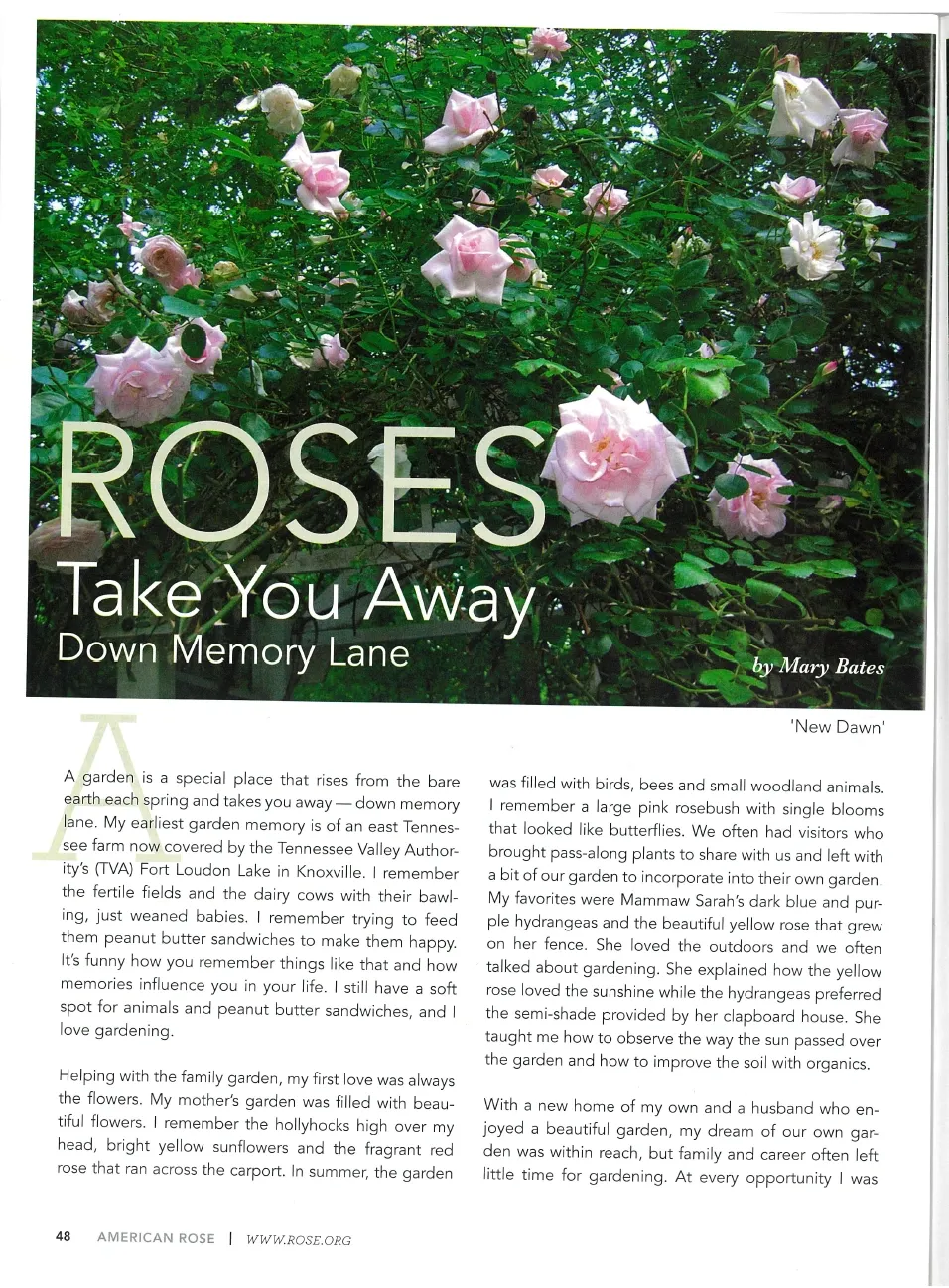
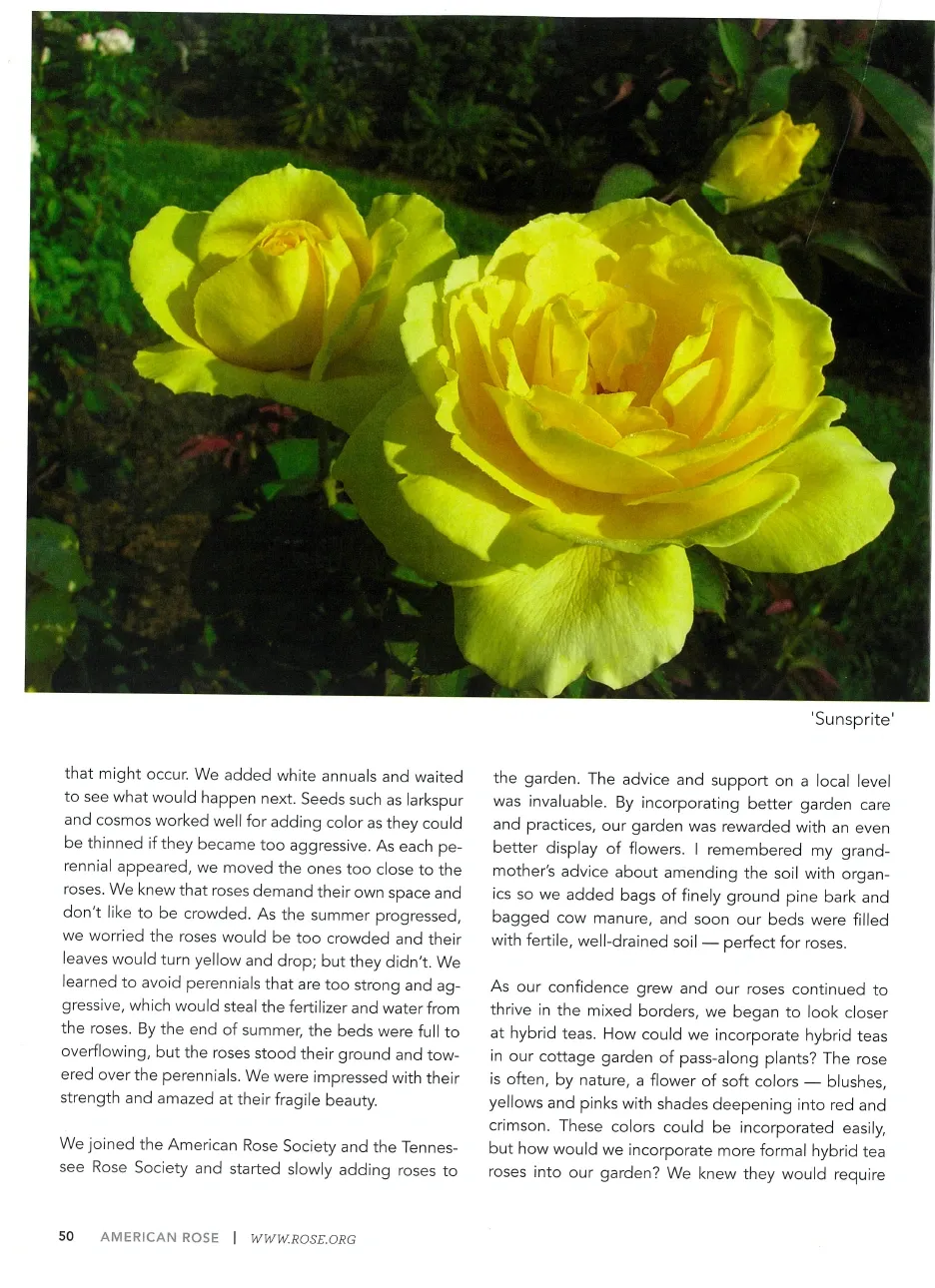
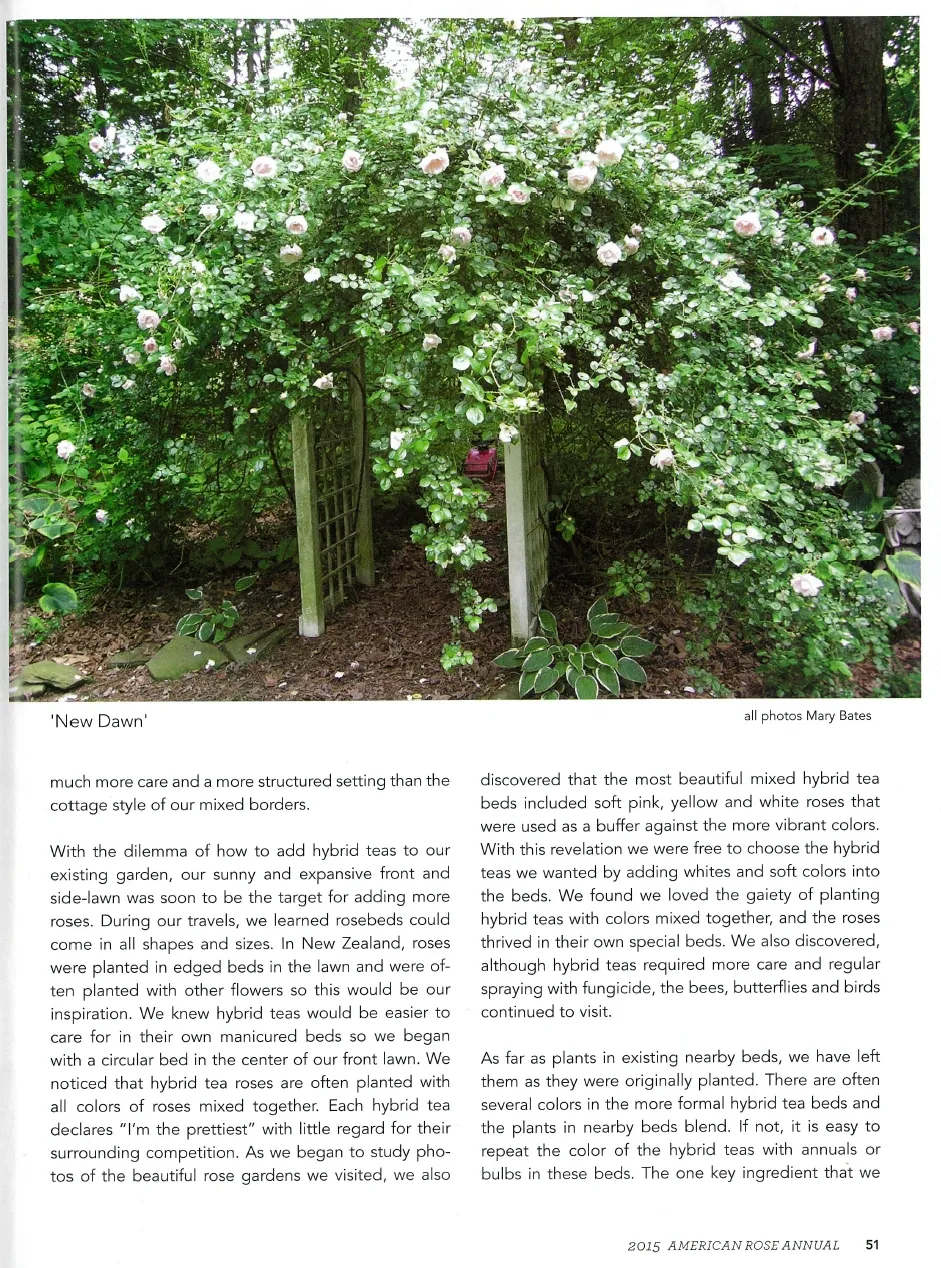
Helping with the family garden, my first love was always the flowers. My mother's garden was filled with beautiful flowers. I remember the hollyhocks high over my head, bright yellow sunflowers and the fragrant red rose that ran across the carport. In summer, the garden was filled with birds, bees and small woodland animals. I remember a large pink rosebush with single blooms that looked like butterflies. We often had visitors who brought pass-along plants to share with us and left with a bit of our garden. My favorites were Mammaw Sarah's dark blue and purple hydrangeas and the beautiful yellow rose that grew on her fence. She loved the outdoors and we often talked about gardening. She explained how the yellow rose loved the sunshine while the hydrangeas preferred the semi-shade provided by her clapboard house. She taught me how to observe the way the sun passed over the garden and how to improve the soil with organics.
With a new home of my own and a husband who enjoyed a beautiful garden, my dream of our own garden was within reach, but family and career often left little time for gardening. At every opportunity I was outside thinking and planning the next wave of color. I wanted something in bloom year round. My mother and grandmothers gave me many of their pass-along plants, and it was fun to watch them naturalize. Soon, there were bees and butterflies just like the gardens I remembered from my childhood.
So our garden progressed with space for seating, trees for shade, shrubs, paving and paths. I remember the lessons of Mammaw Sarah and how she taught me to observe how the sun traveled over the garden. She explained that each plant must have its own special spot and each plant had different requirements. With our backyard being in partial shade, we filled the beds with spring woodland plants and perennials that would accept the filtered sun, but we wanted more sun-loving plants.
When my husband and I were first married, we had the opportunity to travel and work overseas on a seasonal basis. Returning home from the Antarctic, we would travel through New Zealand. These travels started our continuing love affair with roses. In Christchurch, New Zealand, it seemed that every home had a beautiful garden, and nearly all included roses. We were determined to add more roses to our garden.
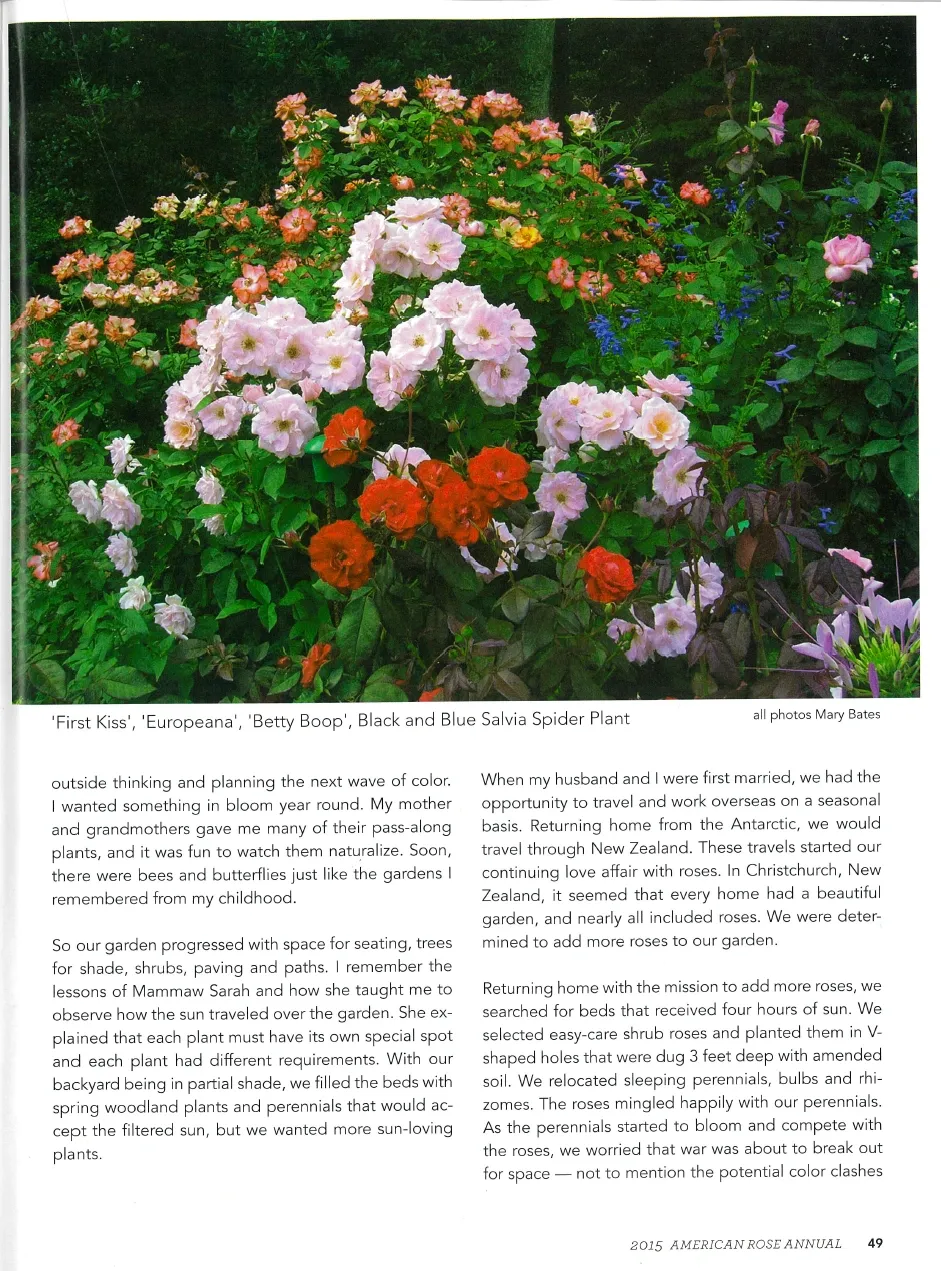
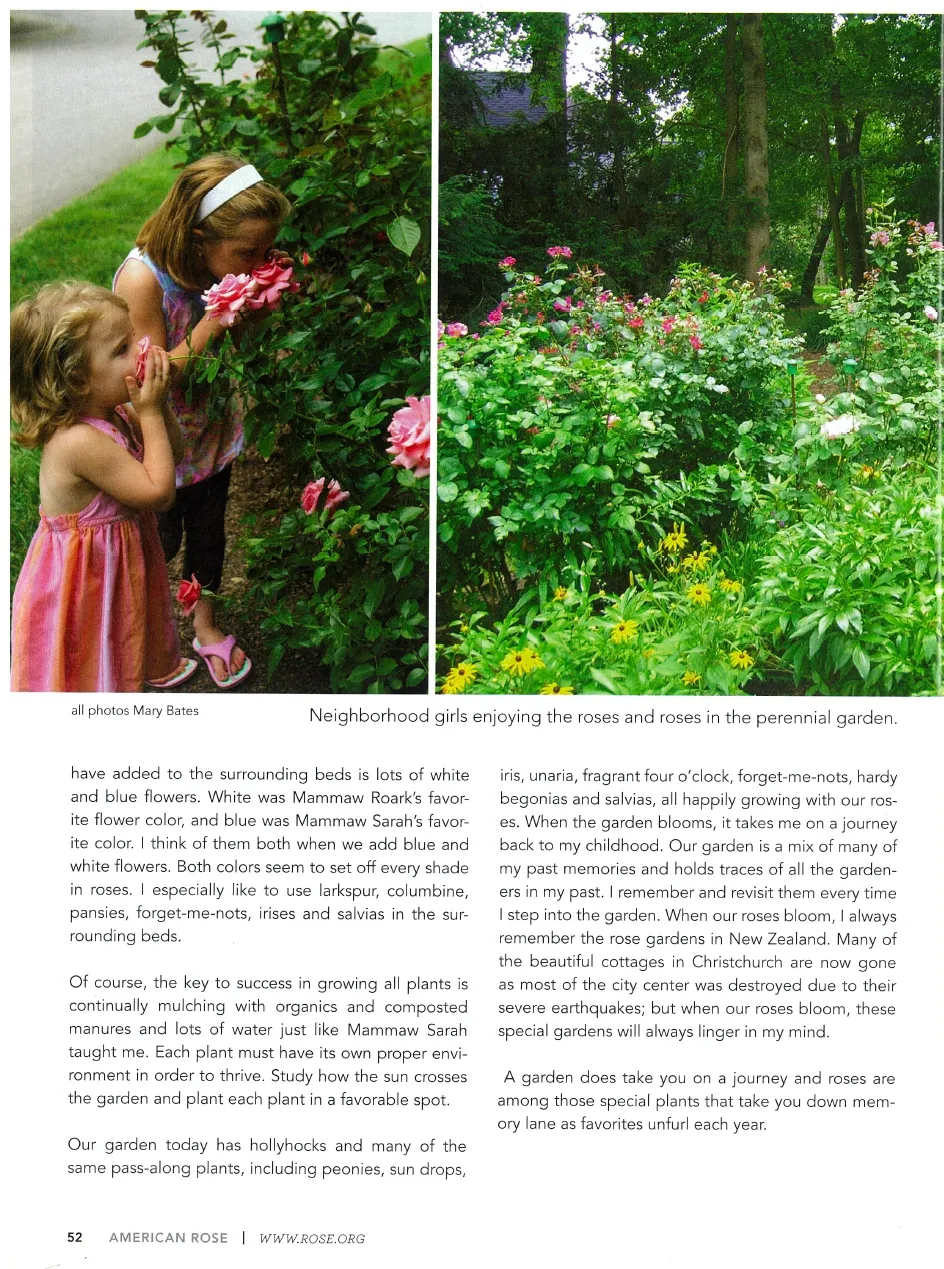
Returning home with the mission to add more roses, we searched for beds that received four hours of sun. We selected easy-care shrub roses and planted them in V-shaped holes that were dug 3 feet deep with amended soil. We relocated sleeping perennials, bulbs and rhizomes. The roses mingled happily with our perennials. As the perennials started to bloom and compete with the roses, we worried that war was about to break out for space — not to mention the potential color clashes that might occur. We added white annuals and waited to see what would happen next. Seeds such as larkspur and cosmos worked well for adding color as they could be thinned if they became too aggressive. As each perennial appeared, we moved the ones too close to the roses. We knew that roses demand their own space and don't like to be crowded. As the summer progressed, we worried the roses would be too crowded and their leaves would turn yellow and drop, but they didn't. We learned to avoid perennials that are too strong and aggressive, which would steal the fertilizer and water from the roses. By the end of summer, the beds were full to overflowing, but the roses stood their ground and towered over the perennials. We were impressed with their strength and amazed at their fragile beauty.
We joined the American Rose Society and the Tennessee Rose Society and started slowly adding roses to the garden. The advice and support on a local level was invaluable. By incorporating better garden care and practices, our garden was rewarded with an even better display of flowers. I remembered my grandmother's advice about amending the soil with organics so we added bags of finely ground pine bark and bagged cow manure, and soon our beds were filled with fertile, well-drained soil — perfect for roses.
As our confidence grew and our roses continued to thrive in the mixed borders, we began to look closer at hybrid teas. The rose is often, by nature, a flower of soft colors — blushes, yellows and pinks with shades deepening into red and crimson. We found we loved the quality of painting hybrid teas with softer mixed companions and the roses thrived in their own special beds. We also discovered that although hybrid teas required more care and regular spraying with fungicide, the bees, butterflies and birds continued to visit.
We have added to the surrounding beds lots of white and blue flowers. White was Mammaw Roark's favorite flower color, and blue was Mammaw Sarah's favorite color. I think of them when we add blue and white flowers. Both colors seem to set off every shade in roses. I especially like to use larkspur, columbine, pansies, forget-me-nots, irises and salvias in the surrounding beds.
Of course, the key to success in growing all plants is continually mulching with organics and composted manures and lots of water just like Mammaw Sarah taught me. Each plant must have its own proper environment in order to thrive. Study how the sun crosses the garden and plant each plant in a favorable spot.
Our garden today has hollyhocks and many of the same pass-along plants, including peonies, sun drops, iris, unaria, fragrant four o'clock, forget-me-nots, hardy begonias and salvias, all happily growing with our roses. When the garden blooms, it takes me on a journey back to my childhood. Our garden is a mix of many of my past memories and holds traces of all the gardeners in my past. I remember and revisit them every time I step into the garden. When our roses bloom, I always remember the rose gardens in New Zealand. Many of the beautiful cottages in Christchurch are now gone as most of the city center was destroyed due to their severe earthquakes; but when our roses bloom, these special gardens will always linger in my mind.
A garden does take you on a journey and roses are among those special plants that take you down memory lane as favorites unfurl each year.